Ready to take your skills to the next level?
Discover a range of professional development opportunities to fuel your success.
Undergraduate Resources
Our CMIST undergraduates don't just learn; they experience. Our dedicated faculty and staff will guide you through a variety of programs that equip you with the skills and knowledge to succeed. A combination of workshops, presentations, and one-on-one meetings helps you think deliberately about professionalism and to be strategic about how your academic experiences translate into professional contexts. In addition, with multiple opportunities to engage in experiential learning, actively conduct research, and practice the professional skills you need in the workplace, you will be well-prepared for the next step in your academic or career trajectory.
Undergraduate Research for Credit
Don't just learn from research, learn to conduct it.
In addition to research done in the regular course of their studies, the Carnegie Mellon Institute for Strategy & Technology (CMIST) offers undergraduate students the opportunity to conduct research under the guidance of our faculty members through CMIST’s Undergraduate Research for Credit course. Students enrolled in this course earn between 3-9 units.
Interested in doing research for credit? Please review the list of research topics with open positions, and contact the CMIST professor directly to discuss the opportunity that interests you. Once you and the faculty member agree to work together, you will complete the research for credit form, and the deputy director for academic affairs will register you for the course.

 Latin America: What Everyone Needs to Know
with Prof. Ignacio Arana
Professor Arana is developing a book that offers an accessible, engaging overview of Latin America’s past, present, and future. The project explains why the region matters globally, how its history has shaped contemporary politics and society, and what major trends will define Latin America in the decades ahead. Research assistants will help synthesize scholarship and gather information across a wide range of topics—including history, politics, economics, culture, and international relations. Tasks will involve reviewing academic and journalistic sources, summarizing key debates, identifying illustrative examples, and verifying facts related to themes such as colonial legacies, coups and constitutions, inequality, migration, social movements, populism, and the region’s role in global affairs. RAs will gain hands-on experience working with interdisciplinary materials, developing research summaries, and contributing to a major book project aimed at general audiences. Students with strong writing skills, curiosity about Latin America, or experience in area studies, history, or political science are encouraged to apply.
 Mapping the Frontlines of Knowledge Security
with Prof. Justin Canfil
Professor Canfil is seeking motivated students for a research opportunity focused on the emerging field of “knowledge security”—the protection of sensitive research, data, and expertise from misuse or exploitation in ways that impact national security, economic competitiveness, and global power dynamics. The project explores how governments around the world are shaping this emerging area and what these developments mean for CMU. RAs will conduct in-depth informational interviews with leading research security companies to analyze the services they offer and understand how their products work in practice. The final deliverable will be a comprehensive “map” of existing tools, capabilities, and critical gaps, designed to support CMU and the US State Department. Ideal candidates will have strong interpersonal and communication skills, professionalism in engaging with external stakeholders, and exceptional attention to detail, along with an interest in the intersection of policy, technology, and international affairs. Having taken 84-375 / 84-675 Geopolitics of Innovation or a similar course is a plus, but not required. Please apply with a current resume.
 Politics Congressional District Game + Electoral College Strategy Game – Student Dev Project
with Prof. Jonathan Cervas
Help level up two interactive political games designed to educate and engage.
The first is Name That Congressional District, a fun quiz where players match maps to US congressional districts. The second is an Electoral College strategy game based on the “Colonial Blotto” framework, where players allocate campaign resources across states to win the presidency.
Professor Cervas is looking for a student developer to help build out both games—adding features like district/state facts, hints, leaderboards, and a searchable database for game content. This is a great opportunity to mix web dev skills (HTML/CSS/JavaScript or similar) with an interest in political strategy and geography. You’ll work independently but with guidance from Dr. Cervas to take both projects from concept to launch.
Check out the beta for the first game
 Hackers' Impact on Policy and the Law
with Prof. Mieke Eoyang
Professor Eoyang is developing a course and a book tracing how hackers have caused reactions in both the policy and legal fields that shape the legal landscape around technology today. The project will identify key historic cyber attacks and intrusions and then explore the development of legal and policy responses to those attacks.
Research assistants will help research the legal and legislative history around those policy responses. Tasks will include identifying criminal cases and opinions, reviewing legislation and legislative history, summarizing the legislative and policy debates. Students with strong writing skills and an interest in the development of law and policy are preferred.
 Interest Groups and Partisan Polarization in State Politics: A Case Study Approach
with Prof. Connor Halloran Phillips
Professor Phillips is seeking research assistance for a project examining partisan polarization in US state governments. Building on findings that interest groups play a role in increasing politicians' extremism, this portion of the project will closely examine politics in several states to uncover the causal mechanisms that explain this pattern. Specifically, the position will require locating and compiling a list of resources providing information on interest group activity and legislative politics in one or more states since the 1960s (including academic research, news accounts, primary sources such as press releases and oral histories, etc.), as well as synthesizing the information contained in those sources into an overall report. Students will gain experience in collecting and analyzing qualitative data in addition to learning about the forces that shaped contemporary politics.
From Cold War Treaties to AI Rules
with Prof. Justin Canfil
Professor Canfil is seeking students for a research opportunity focused on data collection and analysis at the intersection of international technology regulation and contemporary AI policy debates. Students will conduct independent research into historical treaties, agreements, and regulatory frameworks to better understand how past approaches to governing technology map onto current discussions around AI. This work will directly support the development of a major dataset by identifying, annotating, and synthesizing key sources. Ideal candidates will have strong attention to detail, the ability to work independently, and an interest in policy and history; experience with annotation is helpful, and coursework in international law is a plus but not required. No programming experience is necessary. Please apply with a current resume.
Presidents of the Americas since Independence
with Prof. Ignacio Arana
Professor Arana is working on expanding his Presidential Database of the Americas to include detailed biographical information about all the American and Latin American national leaders who have governed since independence. Assistance is welcome to extract biographical information about presidents, especially for those who governed during the 1800-1945 period. Assistants will gain experience in complex data collection and learning about political leadership since independence.
Modeling Statecraft with Game Theory
with Prof. Justin Canfil
Professor Canfil is seeking students with strong math backgrounds for assistance on a project at the intersection of international relations and game theory. The assistant will support the development and refinement of formal models, including checking the accuracy of mathematical proofs, thinking through design choices and equilibrium conditions, and producing visualizations that communicate results clearly. Ideal candidates will have strong mathematical intuition, careful attention to detail, and an interest in formal approaches to the social sciences. Prior coursework in microeconomic theory, game theory, or formal modeling is required. Familiarity with LaTeX (Overleaf for collaboration) is also expected. No programming experience is necessary, though experience with Mathematica, Python, or R is helpful. Please apply with a current resume.
Issue Agendas in State Legislatures over Time
with Prof. Connor Halloran Phillips
Professor Phillips is seeking research assistance for a project that investigates policy agendas in US state legislatures. Do different states address different issues? Do levels of partisanship vary across topics? How do legislators’ attention to and positions on particular subjects compare to those of interest groups? And how have these patterns shifted over time? To answer these questions, this project will draw on recent innovations in the study of state politics to build a dataset of proposed bills, recorded votes, and interest group stances across state legislatures stretching back to the mid-1990s, categorized by policy area. Depending on skills, experience, and interest, student tasks may include data classification, web scraping, contacting outside organizations to request documents, and qualitative analysis of legislation as well as interest group publications. Students will gain experience with data collection and a more in-depth understanding of politics at the state level.
Decoding Ambiguity in World Politics
with Prof. Justin Canfil
Professor Canfil is seeking students to assist with landscape analysis into the topic of ambiguity in international relations. The assistant will conduct independent research into academic scholarship published in leading journals, systematically recording definitions, methodological strategies, research questions, and core arguments across a targeted set of articles. The goal will be to produce a structured map of the intellectual landscape that will directly support ongoing research projects. Ideal candidates will have strong attention to detail, the ability to work independently, and an interest in synthesizing scholarly debates. Experience with annotation, coding qualitative data, or literature review is helpful. Advanced coursework in international relations a plus. No programming experience is necessary. Please apply with a current resume.
Additional Student Research
Dietrich College Senior Honors Program
Through the Dietrich College Senior Honors Program students complete an honors thesis and graduate with College Honors. For more information contact Associate Dean for Undergraduate Studies Kelli Maxwell.
Meeting of the Minds
An annual undergraduate research symposium organized by the Undergraduate Research Office each spring. All students engaged in undergraduate research are encouraged to apply.
Research Training for Undergraduates
Through this academic course, qualified first- and second-year students have the opportunity to work directly with a Dietrich faculty member on an ongoing research project. For more information contact Deputy Director Emily Half.
SURA
The Summer Undergraduate Research Apprenticeship (SURA) course awards tuition-free elective credit to first-year and sophomore undergraduates at Carnegie Mellon for existing faculty projects focused on undergraduate research or creative inquiry under the direction of a Carnegie Mellon faculty member.
SURG, SURF, ISURG
Small Undergraduate Research Grants (SURG), Summer Undergraduate Research Fellowships (SURF), and International Small Undergraduate Research Grants (ISURG) are offered by Carnegie Mellon University's Undergraduate Research Office, these grants and fellowships provide funding for undergraduate students to pursue research in any discipline.
Undergraduate Summer Research (99-409)
This 1-unit tuition-free course allows undergraduate students from all fields to participate in research under the direction of a CMU faculty member. Prior to enrolling, students should have previously participated in summer research via the Summer Undergraduate Research Apprenticeship and/or the Summer Undergraduate Research Fellowship. For more information visit the Office of the Vice Provost for Education website.
CMIST Honors Thesis
Dietrich College Requirements
Eligibility to enter the program is based on three criteria:
- Student must have a major in Dietrich College, either as a primary or an additional major; or be in the BHA program.
- Cumulative QPA through the end of the junior year of at least 3.25 overall, and 3.50 in the Dietrich College major associated with the proposed project.
- Departmental sponsorship in the form of an agreement by a faculty member to serve as advisor for the 2-semester/18 unit Honors project (graduate students may not serve as advisors; adjunct faculty may do so, but only in collaboration with a regular faculty member), and approval by the department head.
Dietrich College Proposal Guidelines
Student Proposal Guidelines and Standards for Honors Thesis Applications
- Students must complete a CMIST Honors Thesis Interest Form describing why they want to do an honors thesis and what they hope to accomplish with their project. Ideally this form should be completed between December-early February of junior year.
- After completing the interest form, students should reach out to the prospective faculty advisor to discuss interest. Pre-agreement, students should clearly outline a specific research question, an initial thesis that answers the question, the theoretical logic underpinning the provisional thesis, and some tangible ideas for how the thesis can be robustly evaluated.
- Students should have an established background in the proposed area of research (AOR); the thesis should not be the student’s first endeavor into the subject matter. For example, the thesis topic could be an offshoot of a previous term paper or course assignment.
- The project and research questions should be feasible with the resources available and the timeline allotted.
- Students must complete all methodology core courses for the CMIST major prior to applying for the honors thesis and have shown competency, as determined by the thesis advisor, in 84-266 Research Design for Political Science.
- All CMIST honors thesis students will present at the mid-point in a group setting/conference-style with other CMIST students completing an honors thesis. Students and faculty will attend, ask questions, and give feedback.
- Students must review and commit to the CMIST honors thesis completion timeline.
Honors Thesis Completion Timeline
(subject to change upon discussion with thesis advisor)
 December-early February (Junior Year): Complete CMIST Honors Thesis Interest Form
February-March (Junior Year): Meet with Faculty Advisor and finalize Honors Thesis proposal and application. The application will include a short research proposal outlining the question, theoretical motivation, and methods.
April (Junior Year): Acceptance to Honors Thesis Program, submit IRB application if required.
August: Literature Review
September-November: data collection (e.g., accessing online data, archival work, interviews etc)
November: Written deliverable- literature review and research design/data collection process summary. Present progress (where the data and analysis is heading) to peers at department conference/group discussion session. Incorporate feedback from peers and faculty. Identify any concerns/problems.
Mid to late January: Submit a detailed outline, as well as introduction, literature/theory, research design, and preliminary data analysis
January-February: Complete data analysis, empirical sections, and write up findings.
March 1: First full draft due at least six weeks before the final thesis is due (e.g. March 1, if final is due April 15).
April: Final draft of thesis is due to thesis advisor for approval and final signatures by thesis advisor, academic advisor, and CMIST director.
Early May: Final Presentation at Meeting of the Minds (Reading Day)

Coursework & Workshops
CMIST goes beyond textbooks to prepare students for the working world. In addition to ongoing advising support, CMIST students have access to mini courses designed to foster professional development and facilitate professional growth. Offered by Haleigh Bartos, associate professor of the practice, these courses cover specific, in-demand skills such as briefing as well as how to successfully navigate everything from the application process and to handling challenges that arise on the job.

84-215
Tomorrow’s Professionals
84-460
Mapping the Future
This seniors-only seminar is tailored to graduating CMIST students, helping them identify job opportunities, increase their marketability, and take the next steps toward their professional goals in careers related to international relations, government, politics, and policy.

84-252
Briefing in the Policy World
Briefing is a critical skill because it is the most direct and formal means of communication with the policy and or decision-maker. One successful brief can fast-track a career, identify you as a subject-matter-expert, and open dialogue with customers—helping build important relationships in the policy world.
Beyond the mini courses, CMIST hosts workshops that complement students' academic studies, equipping them with the skills they need to succeed. Throughout the year, Professor Bartos offers special sessions dedicated to topics ranging from preparation for interviews and summer internship applications, to a summer professional development seminar, to a workshop on jumpstarting your career. In Fall 2026, she is offering a series of sequenced workshops that will cover best practices for beginning a job or internship search, creating application materials, and networking. CMIST students who attend at least two workshops will be eligible for individual professional development preparation sessions with Professor Bartos. CMIST has also worked with the Office of Undergraduate Research and Scholar Development to offer specialized events of interest to students, such as the CMIST scholarships & awards workshop.
Resume Guide
Pi Sigma Alpha
The National Political Science Honor Society
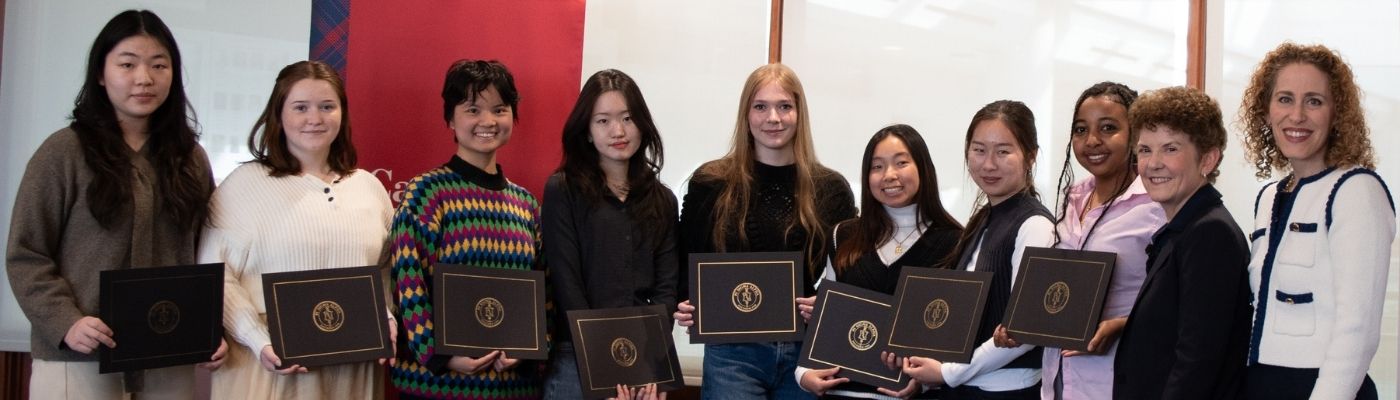
Pi Sigma Alpha is classified by the Association of College Honor Societies (ACHS) as an “upper division, specialized” honor society. Membership in Pi Sigma Alpha is open to students currently taking courses in government, political science, international relations, public administration, or a related interdisciplinary area and enrolled in institutions where chapters are located.
Established in 1919, Pi Sigma Alpha hosts chapters on more than 850 campuses and has inducted more than 300,000 members. Its rolls feature national, state, and local political leaders including one president, three Supreme Court justices, and dozens of members of Congress. Through these 100 years there have been many changes but neither the mission of the organization nor the quality of the individuals inducted has changed. Each year those who have achieved academic excellence are inducted and display the same passion for politics and policy. Like those who first joined, today’s student strives to uphold the purpose of Pi Sigma Alpha first described in 1919: “To encourage the scientific and practical study of problems of government, to foster reforms in our governmental machinery, and to aid in the education of the electorate in problems of government.”
Alpha Nu Alpha Chapter
Carnegie Mellon University established the Alpha Nu Alpha chapter of Pi Sigma Alpha during the 2024-2025 academic year. Its charter members were initiated in spring 2025.
Member Benefits
Pi Sigma Alpha offers many benefits to its members, including scholarships for graduate school and internships in Washington, DC, best paper and thesis awards, discounts on LSAT and GRE test prep courses, as well as chapter activity grants. Members are eligible for entrance at the GS-7 level in numerous professional and technical occupations in the Federal service. Pi Sigma Alpha undergraduate student members have access to join the American Political Science Association (APSA) at a discounted rate and access to professional development resources. Lifetime membership also entitles members to wear distinguished graduation regalia at CMU Commencement Ceremonies.
Eligibility
Undergraduates at Carnegie Mellon University must meet the following criteria:
- Complete at least 180 units at CMU;
- Complete at least 30 units at CMU of work in political science, government, or international relations with an average grade of B or higher in those courses;
- Have a declared major or additional major in CMIST;
- Achieve an overall QPA placing them in the top one-third of their whole class. Since CMU does not have class rank, students should have a cumulative QPA of 3.75 (Dean’s List with High Honors) or higher.

Carnegie Mellon University Washington Semester Program
The Carnegie Mellon University Washington Semester Program (CMU/WSP) provides undergraduate students from any major the opportunity to gain real-world experience by spending a full semester in Washington, DC. Students complete an internship while taking classes on public policy, American politics, governance, institutions, and law with CMU faculty.
In addition to developing professional and networking skills while applying what they learn in class to their internship experience, students who complete CMU/WSP are well-positioned to earn the minor in politics and public policy and are eligible to apply for the accelerated version of the Master of Science in Security, Technology, and International Relations (MS STAIR-AMP), a unique opportunity for current CMU students to complete both an undergraduate and graduate degree within five years.
Learn More
Internship Resources
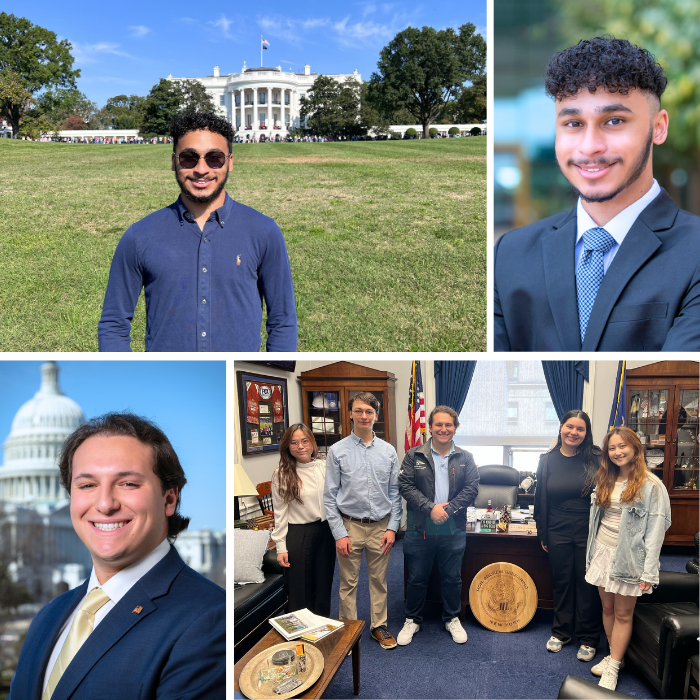
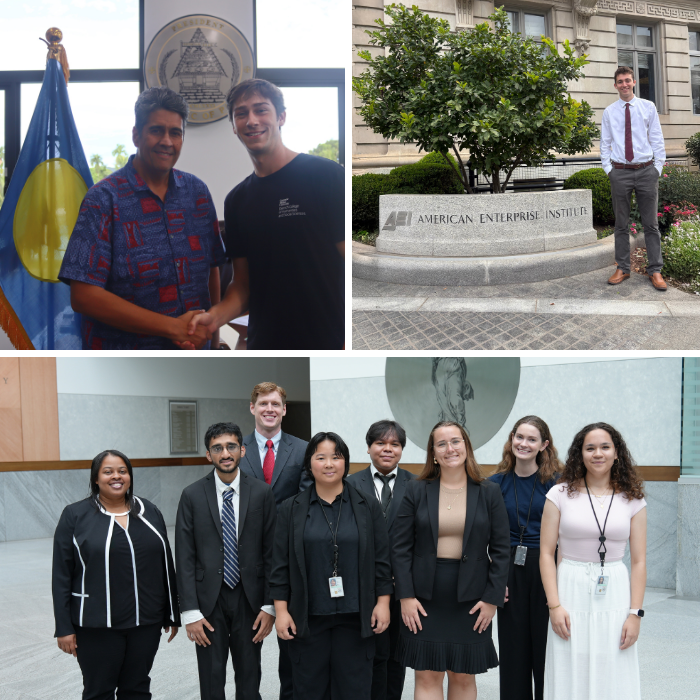
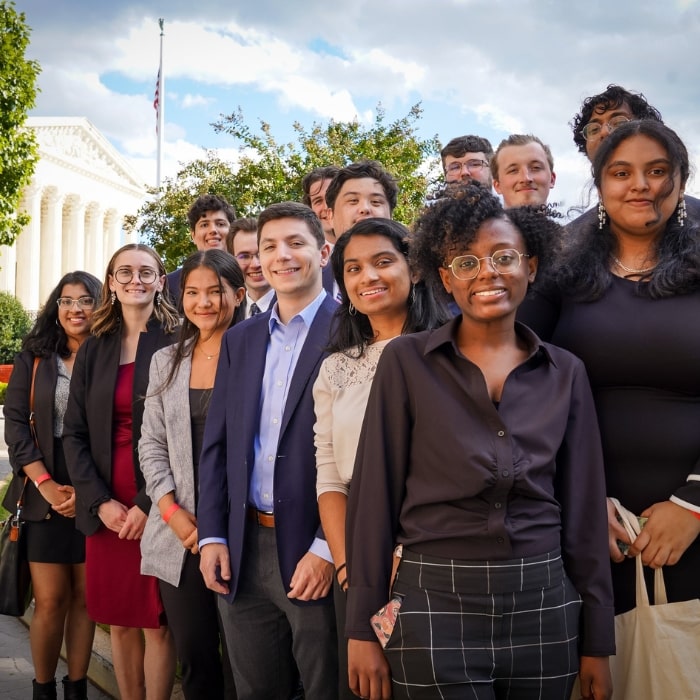
Internships provide real-world experiences that help students explore their career interests, build up their networks, and gain the skills they need to both launch and successfully navigate their careers post graduation. From deciding where to apply, to putting together a polished resume, to intentionally reflecting on how they have grown over the course of the internship, CMIST staff and faculty support CMIST students at every stage of the process, ensuring successful placements whether a student’s interests and skillset take them to Capitol Hill, a nonprofit organization, or the private sector.
For those seeking internships in Washington, DC, CMIST offers specialized assistance including the opportunity to meet with the Washington program manager to develop a search strategy, set up a mock interview, or to discuss D.C.-specific internship funding opportunities.
All CMIST undergraduate students receive a handpicked collection of internship and entry-level job openings through the weekly “Internship & Entry-Level Position Roundup” newsletter (biweekly in the summer). A collaborative effort between our CMIST offices in Pittsburgh and Washington, this newsletter also features scholarship opportunities and professional development resources.
As students of Carnegie Mellon University, CMIST undergraduate students also gain access to several resources to help them find internships tailored to their interests and network with CMU alumni.
Graduate Resources
Our CMIST graduate students are professionally-oriented with an eye towards strategically shaping their future job prospects. Our masters degrees are professional programs, and we focus on career preparation for the duration of the program, beginning at orientation. With the help of our dedicated faculty and staff, you will have access to a variety of supportive programming motivated towards helping you find success after graduation and beyond.
MITS Capstone
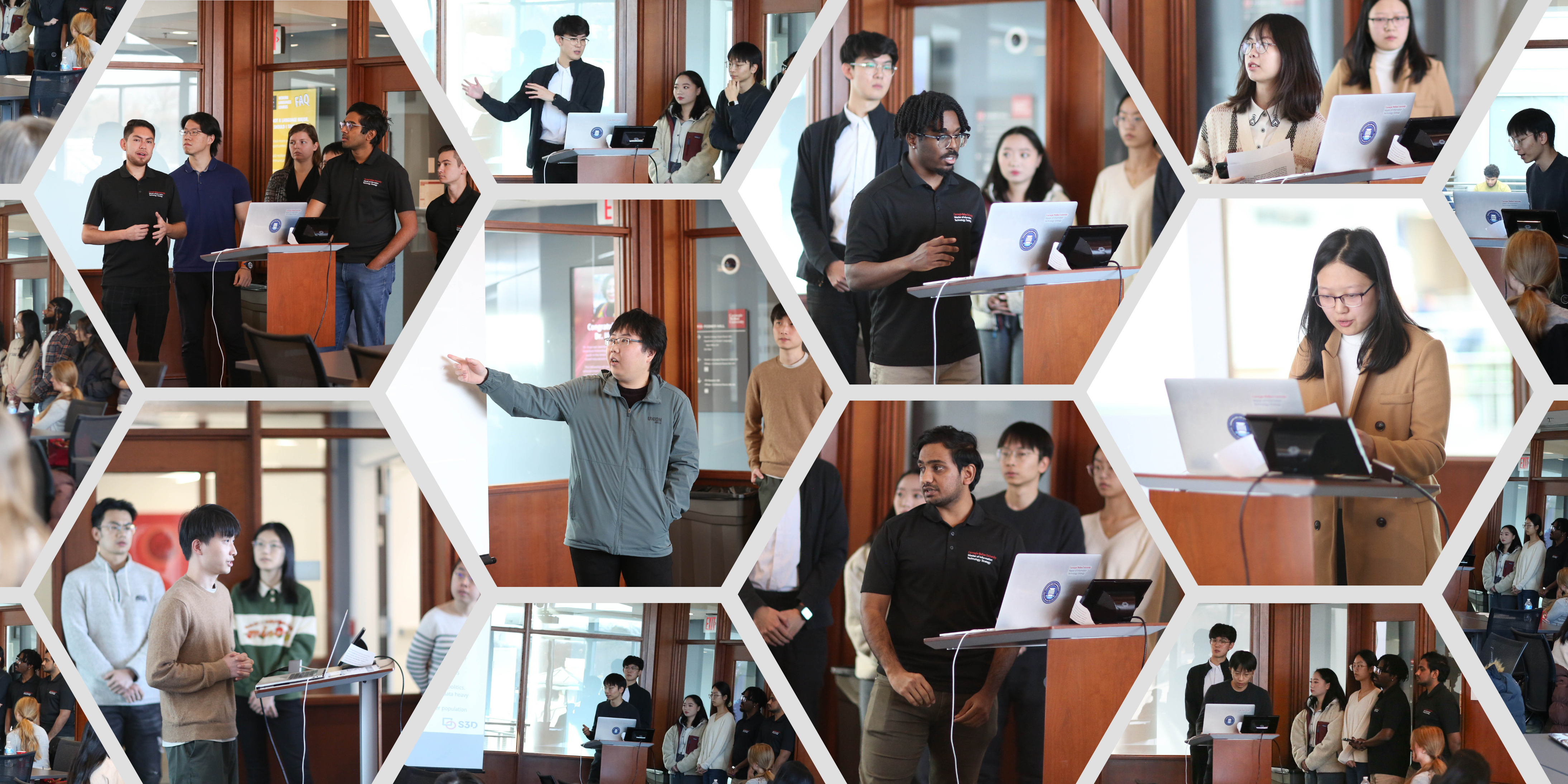
During the Master of Information Technology Strategy (MITS) capstone project, students synthesize and test workable solutions for a particular organization's specific needs over a period of 14 weeks. To support students completing these projects, CMIST offers a workshop that meets once a week during the capstone period and culminates in a final presentation in which they share their recommended solutions. Facilitated by the graduate program manager and open only to those students who have been accepted into the MITS program, this workshop provides students with a laboratory space to apply concepts from their core courses, articulate lessons learned, and strategize the next steps in their career trajectory.
Graduate Workshops
In addition to one-on-one advising and course planning tailored to students’ career goals with Graduate Program Manager, Mark Gardner, CMIST offers a variety of events to support graduate students as they strategize their career trajectories and go through each step of the job application process. Past events have included alumni roundtable discussions, workshops, and presentations focused on particular job sectors.
In Fall 2026, Professor Haleigh Bartos will offer several sequenced workshops starting with "Let's Get Started," which will cover best practices for starting a job or internship search. Workshops will then pivot to supporting students' creation and revisions of application materials as well as covering important practices and strategies for networking. The final workshop in the academic year series will center on developing students' critical skills for interviewing.
CMIST believes that students must take an active role in their career preparations, so any graduate students who show an active engagement with available workshops and support will also gain access to professional development faculty and staff in Pittsburgh and Washington, DC, on a one-on-one advisory basis.
Internship Resources
Internships provide real-world experiences that help students apply their classroom learning to current challenges, build-up their networks, sharpen the in-demand skills that employers need, and gain experience that will help them plan the next steps in their careers post-graduation.
From identifying opportunities aligned with their coursework and career goals to reflecting on their curricular experiences and integrating lessons learned, CMIST staff and faculty support CMIST students throughout the internship process.
In addition to the professional development opportunities listed above, CMIST graduate students also get a curated list of internship openings delivered straight to their inbox. Put together in collaboration between our Pittsburgh and District of Columbia CMIST offices, this internship and entry-level position roundup is program-specific and sent on a weekly or biweekly basis. As students of Carnegie Mellon University, CMIST graduate students also gain access to the following: